


Eight years ago I sat in on a strategy presentation for one of our clients.
The director went through nearly 200 slides. Charts, numbers, budgets.
At the end, nobody asked anything. No questions, no comments.
That strategy gave rise to a new e-shop and a whole ecosystem of touchpoints around it. And when everything was done, nothing changed for the business.
A year later I listened to the director explain why, in terms of revenue and profit, nothing had happened — but that it was actually a good thing.
Rhetoric works far too well
Once you convince everyone with a beautifully prepared story that you're heading in direction X, it becomes terribly hard, half a year later, to explain that you want to turn toward Y.
Persuasion is a useful skill. The problem is that it works even where you decided intuitively. And I don't know about yours, but my intuition about great innovations doesn't work all that ideally.
What works for me?
1️⃣ I have several ideas, not just one I fall in love with. Actually, I need a whole lot of ideas.
2️⃣ I get active pushback from colleagues, because the devil is in the detail. And I'm often not in the detail — so there's a lot I can't even imagine.
3️⃣ I need to test ideas quickly and cheaply. So I don't waste time and money going the wrong way for too long.
At the same time, most strategic decisions happen inside one manager's head. Without any pushback. Intuitively.
I wrote down what we use every week
For the last 10 years I've been collecting notes on strategy from people I respect. At House of Řezáč we tested them on client projects and on ourselves. Mostly on ourselves.
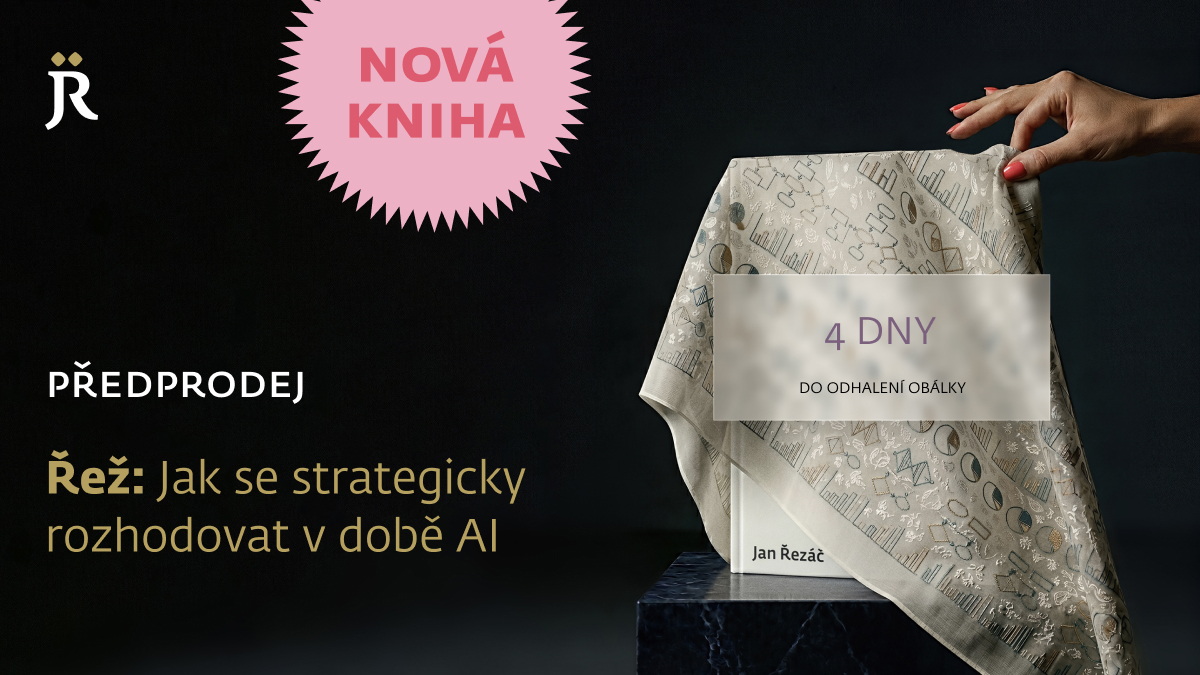
Out of the ones that worked best came Řež — 9 strategic tools that raise the quality of your decisions. From setting goals through mapping the market to cheaply testing ideas.
It isn't a book about how to persuade others. It's about how to reach better decisions before you start persuading anyone.
The pre-order at the founder's price is open.
"Plans are worthless, but planning is everything."
– Dwight D. Eisenhower
Weekend reading
Paul Graham on why the best decisions are made against the grain. And how to do it.


