I know, you already have your strategy figured out. Perhaps some of this text will inspire you to think about it.
1️⃣ Goals
Companies have 4 types of high-level goals.
- Increasing turnover -- we will go to the new market to the Nordic countries and make an XY turn there.
- Turnover protection — we will create a new loyalty program to reduce customer outgoings.
- Reducing costs — we automate billing to reduce the number of people.
- Cost protection — we update the terms and conditions to avoid GDPR problems.
It is very likely that you have some of them set for next year. At the same time goals are not strategies.
2️⃣ Levers
There is a set of high-level levers on each of the four high-level targets. Take, for example, increasing turnover. Where are the potential levers?
- We will sell to someone new (customers, geography,...)
- Increase the order value (up+cross-sell, pricing)
- We will increase the volume of orders (new packages, levels, products...)
- We change the business model (pay per piece, subscription, usage fee,...)
You pondered them. At the same time... like high-level targets, neither High-level leverage is not a strategy.
3️⃣ Strategy
What is strategy? Today's top strategists will tell you it's a set of interrelated decisions that allow you to win and thus have a better future.
The defakto strategy says:
- which goals and levers are the most interesting for our business right now
- How to use them specifically,
- how to achieve the best possible result with what we have,
- Why do we do this and why not that?
The strategy is very very specific in WHAT, HOW and WHY we are going to do.
Example: We will develop a data standard for storing corporate data, open source it and start building migration tools for ERPs on top of it. How does this relate to goals and levers? To do this, you need a much deeper orientation in business.
To be Good at strategy, you need Market Orientation and in his business.
The degree of orientation itself is foolishly measured. So everyone thinks they're navigating the business great. Personally, I divide it into several areas:
- Orientation in organization -- you have mapped out what and how you do. You know your value chains.
- Orientation in customers -- you have quali + quanti customer research behind you. Ideally, you do it continuously and methodically correctly. Know the needs, motivations, concerns of customers. You use them to grow your business.
- Market Orientation -- you have a mapped market. Not just their immediate competition, but also the changing technological landscape.
- Orientation in of the future — you have an idea of what does not change and what, on the contrary, changes.
- Orientation in possibilities -- you have an idea of what can all be done. Modern strategists have described 100+ possible strategic moves that you can actively make.
It's not about doing something (English agencias...). The point is do only those things that make the most sense to you.
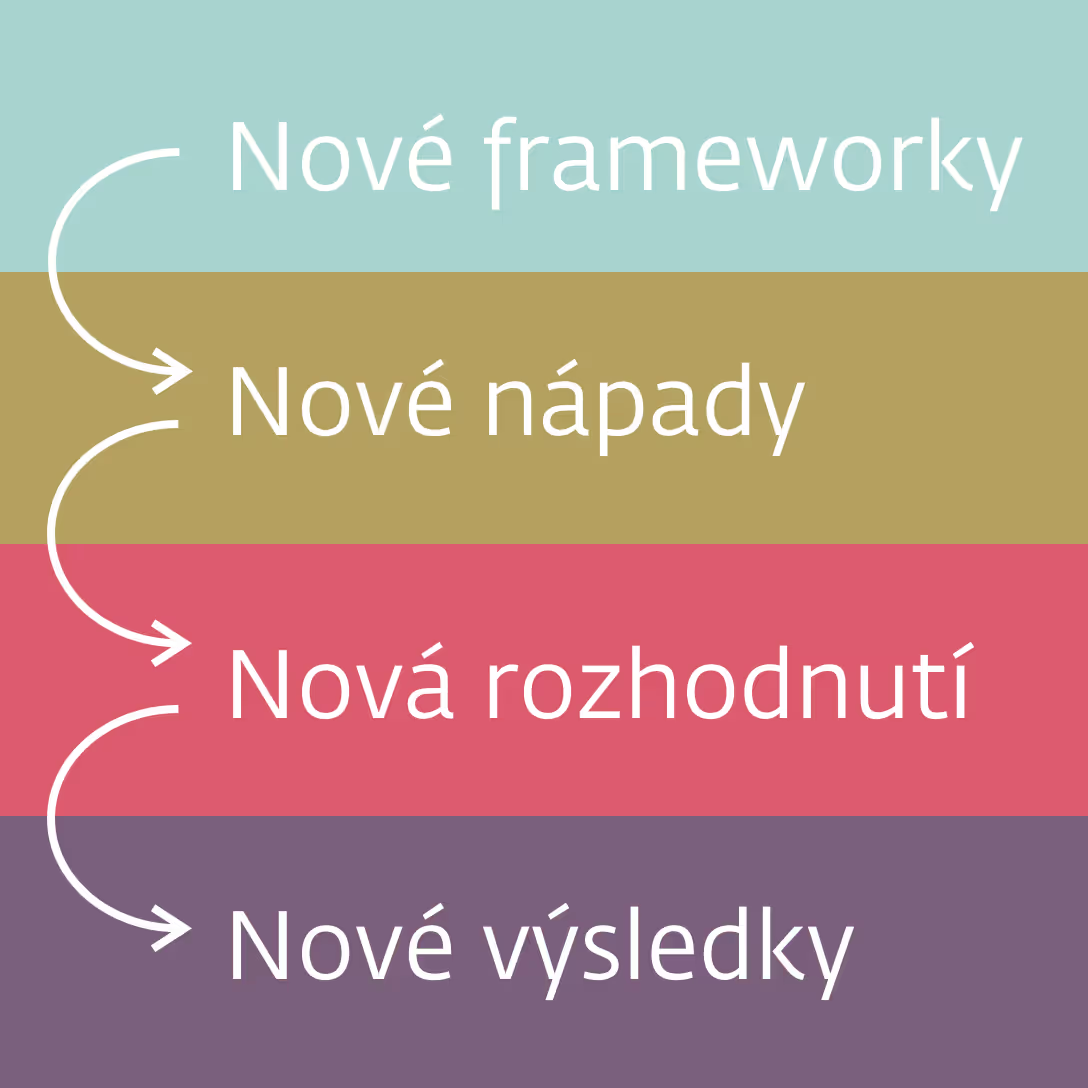
At House of Řezč, they help us navigate the business Strategic Frameworks. Without them, we are a) blind, b) we don't have useful strategic conversations, c) we can't think of new and better options.
List of our frameworks you have here.
You can learn them yourself, or we will speed you to Strategic thinking. As early as March.
“Executives are expected to be data-driven, even if they don't know what it means. “
— Ergest Xheblati
Reading for the weekend
Will the explainer post go extinct?
Are short factual tutorials at the end of their journey thanks to AI?